

Breathe: to relieve
After the year we’ve had we could all use a breath of fresh air.
As yogis, the breath becomes an intrinsic part of our practice. It is the thread that guides and leads us through asana and deeply into meditation, and helps us to focus our awareness upon the nuances of the present moment as it rises and falls. It is the breath that holds a mirror up to us and allows us to truly observe our internal state, and the condition of our body. As we learn to breathe we begin to become more aware of held patterns, memories and traumas that are not aligned with our true values and let go of that which no longer serves us. The breath is our best tool for a nourishing, healthy and happy life and when we learn to work with it we can experience the full vitality of our life force present and operating within our lives.
Physiologically speaking, there have been some links drawn between breath work practices and a higher percentage of homeostasis in the body. As we learn to breathe deeply we begin to gently stretch the soft tissue of the lungs - which can be effective in removing scar tissue from smoking, disease or respiratory viruses. Studies have shown that Yoga therapy/meditation and breath work can improve health and well-being by reducing stress in the body and mind, which in turn boosts the immune response and reduces inflammatory markers in the body.
Learning to breathe properly can be profoundly impactful in reducing the ability of alien invaders to take up residence in the body. Breathing deeply and diaphragmatically helps to oxygenate the bodies cells and fibres, encouraging healing, regeneration and producing a certain level of adrenaline that can be helpful in fighting off foreign bodies. Leading this particular style of practice in the breath work movement is Scandinavian Ice Man ‘Wim Hof’ who’s mission it is to see his particular practice of breath work spread globally to help relieve the symptoms of disease.

In short - breath work may be helpful in reducing the impact Covid 19 can have, or has left, on the mind and body by conditioning and toning the respiratory system to a higher level. This means learning to breathe properly could be an incredibly helpful tool in the fight against the virus, and emerging slowly into the post-pandemic world.
Not only can yogic or mindful breathing be amazing for the body, but earning to control the breath is a one-stop ticket to a a healthier, happier mind. When we breathe using the diaphragm, we send messages through the vagus nerve that we are resting, comfortable and safe. This kicks in an automatic response in moving from the sympathetic nervous system (SNS) to the parasympathetic nervous system (PNS) essentially allowing all of the ‘fight/flight/freeze’ reflexes to shut down, and for healing to happen. By breathing deeply, you can activate your PNS, and in turn, slow down your heart rate and lower your blood pressure—creating a feeling of deep calm.
By breathing deeply and mindfully we can access deeper and more transcendent states of meditation, therefore allowing the body to release and relax any stored trauma and tension. Many people find breath work highly emotional, relieving and rewarding due to the impactful nature of it’s ability to release traumatic memory or patterns stored in the body or mind.
On a more philosophical level breath work, or traditionally Pranayama, was seen as the driving force of expanding life force, or Prana, around the mind, body and spirit. If one could learn to control, hold, direct and expand the breath then one could essentially unlock different parts of the body or mind to open up more space for love to seep in. When engaging with breath work practices we can often feel a fresh sense of joy, vitality and openness in the mind-body that may not have previously been accessible, unlocking deeper states of consciousness and meditation.
The breath is free, it’s available and abundant on this earth. It is one of the only wellness practices available that doesn’t have political or socio-economic qualitative factors to be able to access it. Privilege is not a question here - if you can breathe you can take part in building towards a healthier, happier body and mind. So take a long deeeeeeeeeeep breath (do it right now!) and feel the amazing impact this simple act of life can have.
Live long, and breathe deep.


Chakra Mudras
The word mudra means gesture, seal or attitude and hasta mudras (hand gestures) are safely and commonly used to affect how the vital energy of the body or Prana is contained.
There are many, many mudras in existence and they are a practice as old as yoga itself.
The selection which follows are for use in conjunction with the 7 major chakras.
I would recommend choosing one to work with and sticking with it for a number of days or even weeks so that you get a true ‘feel’ for it. Practice at different times of the day and for different durations, making a note of any effects you may experience. Ensure you warm your fingers, hands and wrists before you begin.
Muladhara Chakra
How to practice:
Lace the baby fingers and ring fingers together, tucking them into the palms. Touch the tips of the middle fingers and extend upwards, then create two interlocking rings with the index fingers and thumbs.
Sit comfortably and hold the Mudra with the middle fingers pointing upwards. Relax, breathe and stay for 5 minutes or longer.
Benefits:
May address feelings of fear or instability and/or weakness in the pelvis. It is thought this Mudra may improve elimination, prolapse and contributes to the upward flow of energy through the body, evoking stability, roundedness and safety.

Svadhisthana Chakra

How to practice:
Cross the middle finger over the top of the index finger on each hand. Interlace the ring and baby fingers and fold them into the palm. Touch the pads of the index fingers and bring the thumbs up to the tips of the middle fingers. Press the heel of the hands together, with the sides of the thumbs touching.
Sit in a comfortable upright, position and relax the shoulders, chest and belly. Place the tip of the tongue against upper palate and soften the mouth. Rest the Mudra against your pubic bone and breathe naturally - stay for 5 minutes or longer.
Caution: contraindicated during pregnancy.
Benefits:
It is thought this Mudra increases ability to adapt to change, opens creativity and spontaneous responses. It may increase the capacity for intimacy with self, others and the environment. It benefits the reproductive system, increases fertility and tonifies the blood.
Manipura Chakra
How to practice:
Cross the index fingers and wrap the middle fingers over the opposite index fingers, resting the tips of the index fingers on the edges of the ring fingers. Touch the tips of the thumbs, ring and baby fingers.
Sit in a comfortable position and hold this Mudra in front of the solar plexus. Imagine a glowing ball of golden-red light in your belly. Rest in stillness and breathe naturally. Stay for 5 minutes plus.
Benefits:
It is thought this Mudra helps to strengthens the digestion, improving the health of many organs. It bolsters willpower and increases personal magnetism. Go get ‘em!

Anahata Chakra

How to practice:
Bring the index finger to rest of the base of the thumbs and then touch the tips of the middle and ring fingers. Extend the baby finger. Rest the hands lightly on each thigh and allow the breath to slow and quieten. Feel spacious in the chest and abdomen. Stay for 5 mins plus.
Benefits:
It is thought this Mudra helps to strengthen the heart and pericardium, regulates blood pressure, improves circulation and the health of the arteries and veins. It awakens the spirit of self-care and self-reflection, serving as a reminder to slow down and future the body, mind and spirit.
Vishuddha Chakra
How to practice:
Loosely interlace the fingers of the hands with the tips of the fingers pointing inward, toward the palms. Join the tips of the index fingers and thumbs, to form two interlocking rings.
This Mudra can be practiced with the hands in front of the throat. Place the tip of the tongue on the upper palate of the mouth, and then relax your throat, chest and shoulders. Breathe into a spacious feeling inside the throat and neck.
Benefits:
This Mudra is said to benefit the voice, reduce tension in the neck and improve communication with your self and others.

Ajna Chakra

Mahashirsha Mudra translated means 'Great Head' and is a Mudra that can be used in connection with Ajna Chakra or the Third Eye.
It is simple to perform. Bring the ring finger into the centre of the palm and touch the tip of the thumb together with the index and middle fingers. Extend the baby finger. You can rest your hands in your lap, breathing naturally and stay for 5 to 20 mins.
It is thought that this Mudra is good for relieving headaches, reducing tension in the eyes, relieves sinus congestion and improves mental clarity.
Let me know how you get on.
Nirvana Mudra is another to use in connection with Ajna Chakra, or Third-Eye. It's a little more complicated to get into, but I think it's worth the effort.
How to practice:
Start with one palm turned up and the other turned down. Move hands on top of each other, so that the backs of the hand touch. Then link the baby, ring and middle fingers together. Rotate the wrists so that you roll the fingers downward and then in, pointing the fingers towards the chest. The index fingers will naturally meet allowing the thumbs to rest between the index fingers. Move the Mudra so the fingers point upwards and bow the head forwards so that the index fingers touch the third eye - between the eye brows (not the centre of the forehead). Hold for 1-2 mins.
Benefits:
This very symbolic Mudra is a lovely way to bring your practice to a close as you can sit, dedicating the benefits of your practice to the welfare of all beings. A lovely mantra to recite here is: Lokah Samasthah Sukhino Bhavantu (May all beings everywhere be happy).

It is thought this Mudra reduces the ego, selfish desires and awakens the heart of compassion.
Lovely!
Sahasrara Chakra

How to practice:
To practice, bring the thumbs and index fingers together to form a diamond shape and bring the hands above the head. Relax the shoulders and breathe naturally. Feel as if you are receiving a shower of light from above.
This Mudra is lovely when practiced outdoors, either early in the morning, or under the cleansing and healing light of the moon.
Benefits:
It is thought to benefit brain function, reduce headaches, stimulate the pituitary and pineal glands and activates the body's self-healing power. It calms the spirit and induces a feeling of connection with all life.
Adapted from Mudras of Yoga by Cain Carroll.
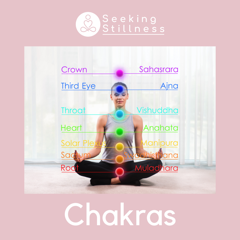
Chakras
Everything in existence is made of energy. Ancient healing practices, including Yoga and Traditional Chinese Medicine (TCM) to name but two, have based their understanding on this and have used their holistic understanding of the natural body, plus the healing powers of nature and energy to benefit, balance and restore both body and mind.
Yoga calls this energy of the subtle body Prana; TCM calls it Qi. When the body is not well, the thoughts unclear, our relationships unstable or our journey through life seems uncertain, we can look to balance the energy of our body to ensure we are functioning well on all levels of our existence.
In the Yoga tradition it is thought that over 72,000 energy pathways called prana nadis lace their way through the human body. Where a collection of pathways meet there forms a vortex of energy and this is called a chakra which is often resembled as a spinning wheel of light or symbolised by a lotus flower. Of these, the most commonly recognised and largest chakras line up near to the spine, along the Sushumna Nadi, tracing a pathway that begins near the pelvic floor and end at the crown of the head.
It is these along these pathways in which energy or life-force, flows. When a pathway is blocked, or a chakra wheel is not spinning freely, we may become dis-eased. For optimum health and well-being, Prana must flow freely throughout the body.
What follows is a brief description of each of the seven main chakras and some advice for how to balance and restore the Prana of the particular chakra.
Root Chakra
Beginning at the base of the spine, the root chakra, Muladhara, represents our basic need for survival and safety. We all want to feel grounded and this chakra is governed by the element of Earth - this is why being outside in nature, physical activity, or simply sitting under a tree to meditate is recommended to help bring this chakra into balance. When balanced we feel secure, we feel that we belong and our sense of self-worth is strong.

How can you help to balance the energy of your root chakra?
Positive affirmations repeated daily can really help. Try: “I am safe”, “I am supported” or “I am fearless”. Organise your day/week so you don’t feel overwhelmed and schedule time for fresh-air breaks where you actually go outside and walk around. Eat a healthy diet and get plenty of sleep: address your basic needs for wellbeing and survival. Pelvic floor exercises are very important to stabilise this chakra, as well as to support posture and movement.
Sacral Chakra
The second chakra is the sacral chakra - Svadhisthana and is situated between the genitals and the naval. Svadhisthana can be translated as sweetness and as such, this chakra is the seat of our desire for pleasure: relationships, sexuality, nurture and movement. The root chakra gives us safety, the sacral chakra provides us with reasons for living. Represented by the element of water, this chakra is very feminine in nature and is able to cope with change and thrives when we embrace our passions. It governs all bodily fluids including salvia, seminal fluid, blood and lymph. If we remember that our bodies are mostly composed of water, we can then recognised how important this chakra will be to our overall feelings of wellbeing.

How can you help to balance the energy of your sacral chakra?
Due to its watery nature, spending time in or around water can help to balance the energy of Svadhisthana. Enjoy a salt scrub which will support your lymphatic circulation and stimulate your skin’s renewal and end this with a cold shower to really boost your energy. Embrace creative projects that bring you joy and reward yourself with pleasurable activities. Book a dance class or simply play your favourite soundtrack and dance around your house. Drink more water!
Solar Plexus Chakra
If Muladhara chakra is about our belonging to our tribe, Svadhisthana is about developing individual relationships, then the third chakra, Manipura is about the self and how we can connect to all humanity. A balanced solar plexus means we treat everyone as equals and we realise our own self-worth, as an individual, as a partner and as part of a community. Those with good solar plexus energy enjoy challenges, are able to express themselves well, feel able to act with integrity and without the need for constant reassurance.

How can you help to balance the energy of your solar plexus chakra?
Try repeating the mantra: “I accept and value myself exactly as I am.” Stay strong in your core and regularly include core-strengthening exercises. Get outside into the sunshine as often as possible - Manipura energy can be seen in a glowing complexion and sunny disposition. It is recommended to fast to support the energy of the solar plexus - my experience is with the 5:2 diet and intermittent fasting which is where I narrow the number of hours in the day for food consumption. I find this method very beneficial but do your own research and explore what works for you.
Heart Chakra
The heart centre represents balance. Anahata chakra is situated mid-way along the main 7 chakra pathway and is the intersection between the first three chakras (root, sacral and solar plexus) which are physical in nature, and the next three chakras (throat, third eye and crown) which lead us to our spiritual selves. Because this chakra’s element is air and its sense is touch we feel balanced here. Think about feeling a cool breeze on your skin. You can feel the air but cannot see it; a balance of physical and ethereal; the heart chakra constantly works to harmonise our physical existence with our ethereal one.
Has anyone ever placed their hand on your arm in a warm, kind, healing sort of way and you just sensed that vibe? That person’s heart chakra is likely to be in balance because they are easily sharing their compassion and kindness with you. Your heart centre is also open and balanced, allowing you to connect with that energy. Have you ever felt the opposite, when somebody’s touch felt repellent? It could be that your intuition kicked in to protect you from their possible negative energy or that your heart energy was drained, you were stressed and had gone into self-protection mode.

How can you help to balance the energies of your heart?
Meditation is great and the energetic heart in its central location is perfect for visualisation. You could try a Metta (loving-kindness) meditation. This 60-min Yin Yoga class is a journey through a loving-kindness mediation. Massage (remember sense of touch) is also perfect and can be a great way to connect with loved ones, and to feel loved.
Throat Chakra
The throat chakra represents communication and can be felt through the tone, clarity and strength of the voice, the ease with which you communicate your thoughts and ideas, and even in your ability to listen and understanding others. It is thought that the heart and throat chakras are in constant communication with each other as you balance how you communicate, with what’s being communicated to you and how you react to it. If a person speaks with a dull, monotonous voice, their throat chakra may be blocked. If a person frequently needs to clear their throat and seems unable to get their words out is another side. A weak throat chakra may be seen in the chin falling towards the chest in a shielding sign of protection or in feeling as though you're not being heard by those around you.

How can you help to balance the energy of your throat chakra?
Singing, chanting, reading and listening to stories all can help. The Bijah mantra for the throat chakra is Yam (pronounced Yuummmm). Try a couple of minutes of chanting that or even chanting OM and notice how it makes you feel. The next time you speak with a friend, notice how carefully you listen to them. Do you feel heard when you are speaking - can you explore different methods of communication such as writing letters. If you are feeling low, tell somebody and in the same light, when you are feeling loved, let that person know too.
Third Eye Chakra
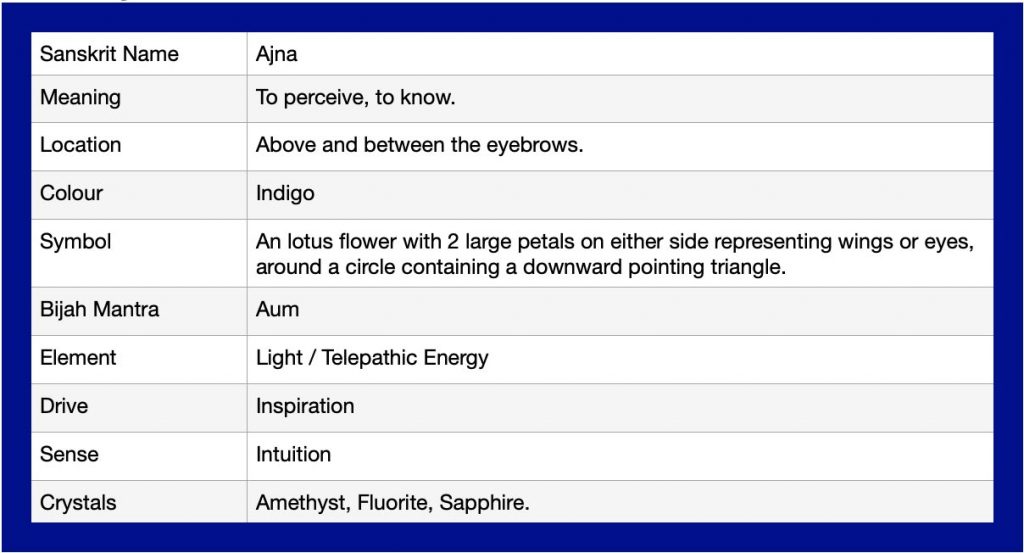
Ajna chakra is the 6th energy centre and is located between the eyes, slightly above the bridge of the nose. It is associated with the pituitary gland which is often considered to be the master controller of the endocrine system. Ajna chakra is associated with our ability of discernment - there are no excuses where this chakra is concerned. When something is right, we just ‘know it’, and we are therefore able to lead an inspired life. When we are born, it is thought the third eye is very much open, but this sixth sense of wisdom, intuitiveness and insight can make life very uncomfortable and so we may train ourselves to shut this facility down. Those with an open or balanced third-eye chakra are alert to coincidences and often experience moments of pure insight, perception or clairvoyance.
How can you help to balance the energy of your third eye chakra?
When this energy centre is blocked we may limit ourselves and our abilities, second guessing outcomes instead of trusting the path of fate. Taking time to meditate, becoming still and turning your gaze inwards, literally looking towards the third eye centre (although this can be tiring to begin with so I would begin by focusing on the tip of the nose first before moving the internal gaze upwards). You can also help by regularly performing eye exercise, similar to those we practice in yoga class - roll your gaze around the edges of your eye-sockets and look to the periphery of your vision.
This chakra is benefitted by stillness and quiet and so any practice that provides this will help. Try lying on your yoga mat under the stars and contemplating the site of the universe and how small we are as individuals. Even though we may be tiny in comparison, we always remember the intricate part we have to play and how necessary we are. Listen to the sound of your own heart beating and remember that our true guide comes from within.
Crown Chakra
The final chakra, Sahasrara is situated at the crown of the head, floating like a halo and is symbolised by a 1000 petalled lotus flower representing infinity. Our aim in life to rid ourselves of any negativity, or obstacles that hinder our pathway to the discovery of our true inner selves. The crown chakra is pure spirit and a place where we feel complete peace and wholeness. We may occasionally gain glimpses of this state of being and it is so wonderful, that we know that there is no other true meaning to life. When connecting to this chakra, we can perceive our life’s true meaning and this focuses and guides us on the path to spiritual enlightenment; we transcend the ego and the material world.

How can you help to balance the energy of your crown chakra?
Meditation with crystals is a lovely way to purify the spirit and connect with our true meaning. Create a sacred space with an alter in a light and airing corner of your home where you go to to find stillness, space and peace. Place upon your alter cleansed crystals, objects or pictures, flowers or other symbolic objects that have meaning for you. Make sure it is not cluttered and apply this principle to other areas of your home - give away or repurpose items that are no longer in use and are simply taking up space. Regularly visit your alter and sit, allowing yourself to be open to infinite possibility, to the inter-connectedness of all things and the Devine wisdom to make wise choices.
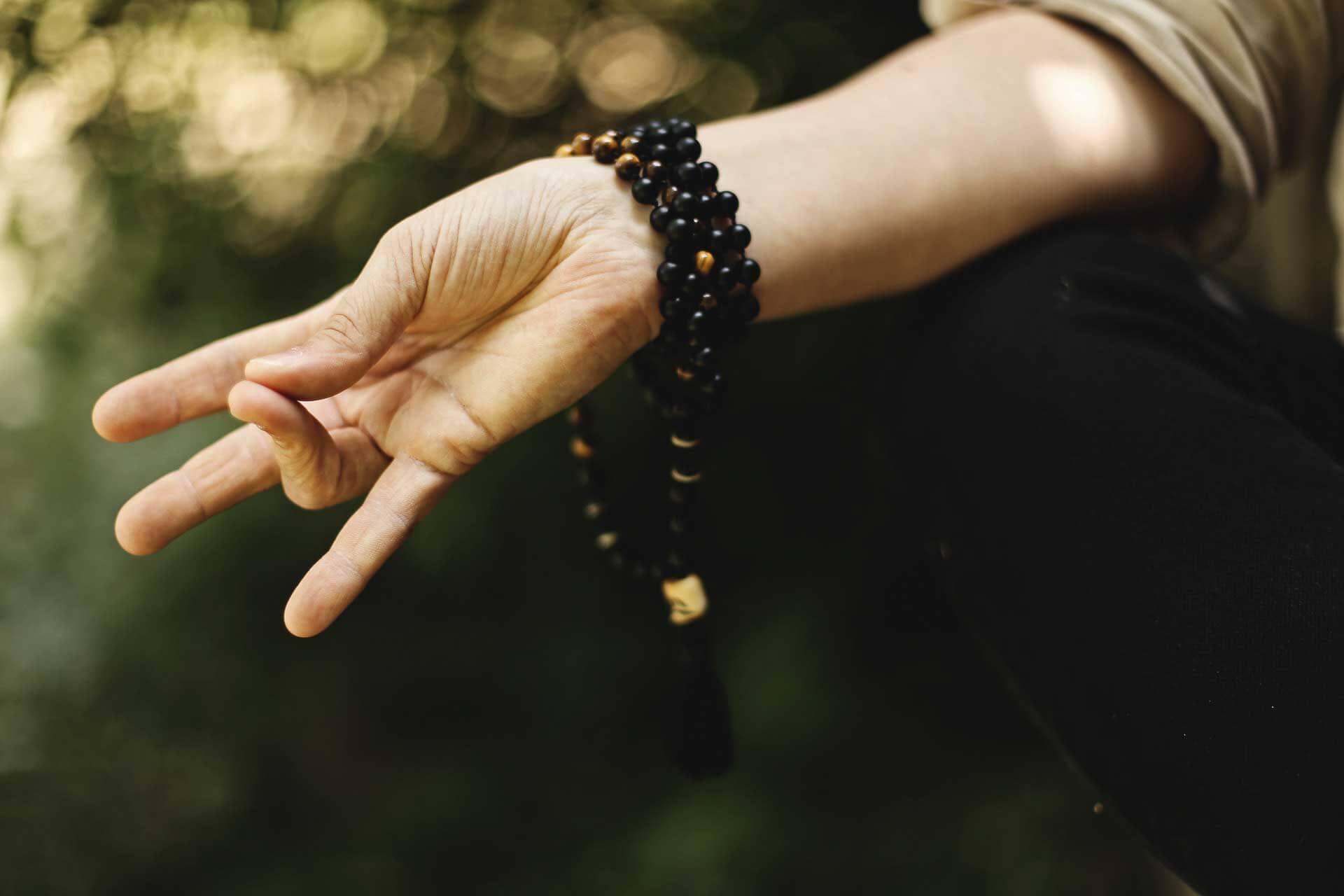
Looking After Your Wrists and Shoulders
In our classes last week, we focused on upper body mobility and strength (thanks Angela for a fab suggestion - if you'd like me to focus on a pose or a specific area of yoga, do let me know in the comments below).
In this article, I wanted to pay some attention to the cues I’m often giving in class and my reasons for doing so and have included links to a few short class videos that you can also find on my Seeking Stillness YouTube channel.
Particularly for women, upper body strength can sometimes be lacking - women are often not as naturally strong as our male counterparts. Research shows that the upper body is one of the main areas that women will suffer with osteoporosis as our hormones change. Classically, women struggle with osteoporosis in the shoulders, wrists and lower back.
I speak about this regularly in our Yin practices and yin poses such as Sphinx or Seal are great for building bone density in the shoulders and wrists. However, in our standard yoga classes, often I see students put off practicing arm balances such as Crow because they lack the stability and strength in the upper body.
Of course, with the right advice, plus a generous sprinkling of motivation and discipline, I believe these weaknesses can be overcome.
The shoulder joint is a particularly complex and yet vulnerable area and we ask a lot of it during our yoga practices from handstands and shoulder-stands, to Gomukasana (cow-face pose).

In many Yoga classes, you will be asked to come into an all-fours position and even this simple starting point can be uncomfortable for some.
If like me you struggle with wrist complaints - I often suffer with ganglion cysts, so much fun! You could try elevating the wrist using a small wedge or rolling up the end of your yoga mat for a little more comfort. This will keep the wrist joint more open and may encourage you to place more of your body weight into the knuckles at the top of the palms.
Here’s a short wrist mobility sequence you can try at home. In my opinion, it is important to regularly build wrist strength, so this may be very useful as a starting point, as well as exploring weight-bearing exercises such as high plank (see image below).
In class, I will often refer to your horseshoe palms (see image below). This is because I want you to target your body weight away from the delicate and congested wrist joint and towards the top or the palm or horseshoe. This is good practice for arm balances such as Crow and Handstand in future practices.
https://seekingstillness.co.uk/wp-content/uploads/2020/12/Hand-infographic.mp4
With these cues, you are engaging your serratus muscles that work to stabilise the shoulder. Once I became aware of this, it has completely transformed my practice and I have overcome a nagging shoulder injury sustained by too many unstable Chaturangas. My handstands are stronger and I am not dropping so much of my body weight into my palms.
Next, think about your upper arm bones. From an all-fours position, press into the inside of the horseshoe palm (towards the thumb and index finger knuckles), and think about spiralling your upper arm bones outwards. Imagine you are wringing out a wet dishcloth and you get the idea. This may give the sensation of your shoulder blades hugging the back of your body and your arms pits moving towards one another.
https://seekingstillness.co.uk/wp-content/uploads/2020/12/High-Plank-infographic.mp4
Here’s a class introduction from the summer where I explain in more details about hand and shoulder stability. It’s a 30 mins clip so worth rolling your mat out and joining in.
Hand and Shoulder Class Excerpt
With this subtle yet powerful awareness, I hope you too will find your shoulders rapidly build strength and stability and you will feel lighter when in weight-bearing positions.
In discussion with another yoga teacher this week, his opinion is that good old press ups are underrated - with the right foundational stability as spoken about above, sets of press up variations should be able to build plenty of upper body strength to assist with those more challenging poses. Watch out for these in class this week!
My personal experience of recovering from a shoulder injury has been a slow one. Be patience if you have an injury here – rest is often the best healer. Once your pain has decreased, then begin to explore gentle Cat-Cow or Bridge movements, gradually building stamina and remembering to be kind to yourself always.
If you’d like a full length class practice with a shoulder focus, use the link below:
Shoulder Practice Class Recording
My suggestion is always, if you are struggling with pain or a pre-existing injury, to seek the advice of a medical professional before embarking on any self-diagnosis or rehabilitation. The advice I provide here is not intended to replace that of any medical professionals.
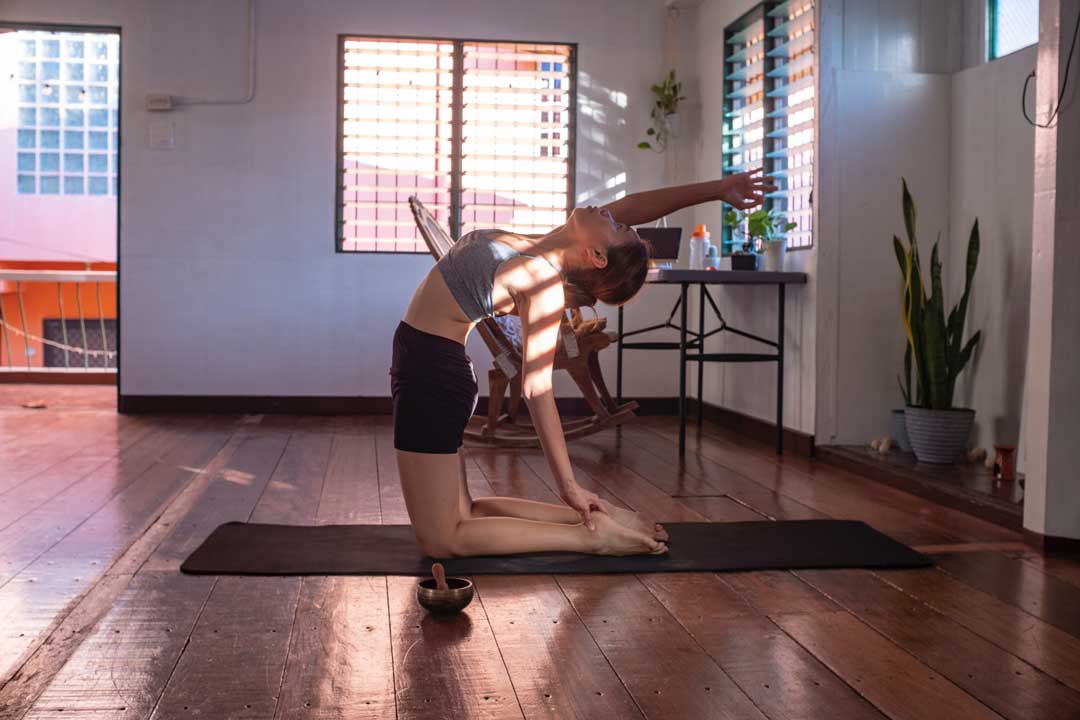
Setting Up Your Home Practice Space
"It’s not only about creating a space, but about creating time to be in this space…"
In my experience, one of the successes to establishing a regular home yoga practice is creating a dedicated space for this and for you. A space where you can easily step on to your mat at any time of the day or night and sink into your yoga vibe because let’s face it, something magical happens when we step onto our mats. It’s one of the reasons why we keep returning to class.
However, it’s the act of getting onto our mats that can be the issue and so this article aims to help you with the logistics.
“But I don’t have room for a dedicated practice space"
...I hear you say! And that may well be true. Not many of us are fortunate to have an abundance of spare space in our homes and that’s fine. What I want you to create is a dedicated space for rolling out your yoga mat. You can always roll it away once you’re done.
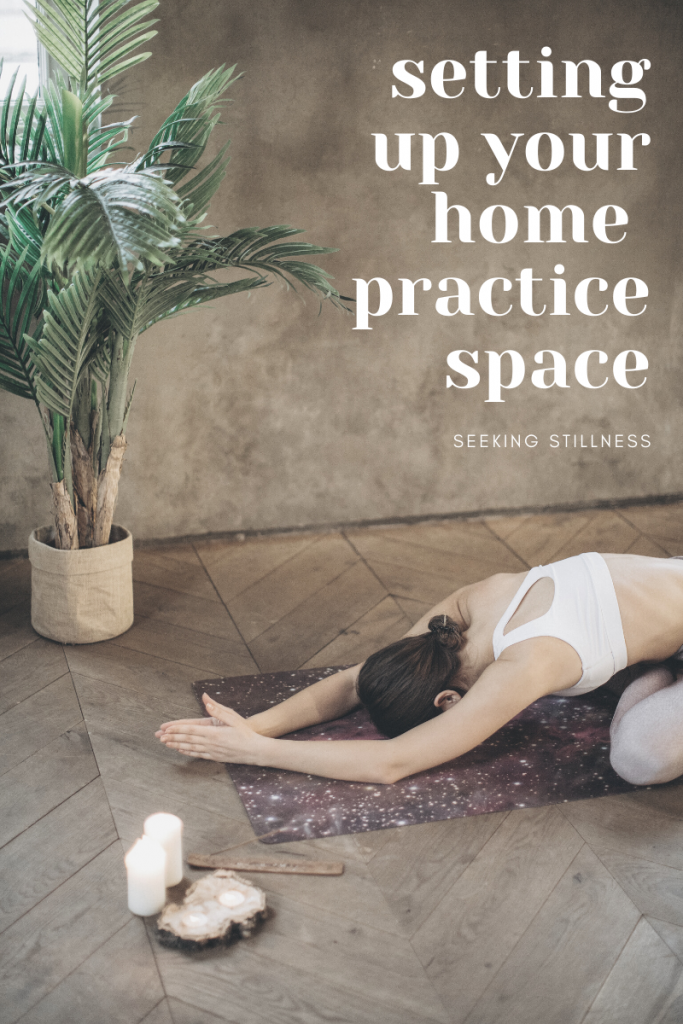

Now please, don’t for one minute think that I’ve nailed this - far from it. I am a busy mum of 3 kids who, when they were younger, thought that mummy’s yoga practice was an invitation to climb on top of me or roll around underneath me whenever I got close to a down dog. Now that they’re a bit older, my yoga practice is definitely not cool, so I am more or less left to my own devices.
The difference is now that they’re older, instead of wanting to bother me, they bother each other and I’m often interrupted by frequent bickering or food requests… does this sound familiar at all?
So, in order to practice with a bit of peace and quiet, I must work around my family.
I find my most sublime moments are early in the mornings, before the rest of the house has woken (this is why I always have a mat in my bedroom so I don’t disturb anyone too much). I love to be up and awake first, watching the dawn rising as I practice.
Whilst I try to practice every day, I don’t beat myself up if I don’t always make it. Some nights, if I haven’t slept too well or the kids have been up, I may find time to practice in the afternoon, when I feel I’ve got more head space.
My practice is never too long or too strong - I attend actual classes for that. Instead, my early morning practice consists of breathing, meditation, joint mobility work and simple, gentle, flowing vinyasa. I move in a way that my body and mind asks from me and this comes best when I’m quiet and contemplative. When I allow myself this time and opportunity, I find that my day tends to be more productive, creative and calmer.
I am a better mum when I make time to practice.
Without a doubt, if you are wishing to further your yoga practice, then you’ll need to be practising at home, and doing this on your own. This means without following a recorded class, or showing up to an online class with a teacher instructing your every move or watching and queuing your alignment. Nothing is wrong with any of these and I wholeheartedly encourage you to explore them, but for me the magic of the practice happens solo. Just get on your mat, remember what you’ve been taught and see what happens.
So here’s my guide to creating and using your own practice space and it’s remarkably simple:
- All you really need is space enough for your mat with a little bit of room around the sides. Near to a plain wall is an advantage for some postures. Being near a window is also nice.
- Clear this space of clutter. If it’s next to your bed or a little corner of your lounge, put away your belongings and aim to keep this space clean and empty. This will enhance your practice and you’ll feel less stressed whilst in this space.
- Keep your yoga equipment tidy. Put everything away once you’ve finished. Make this part of your ritual - you’ll be practising the niyama, Sauca (cleanliness). If you have the luxury of leaving your mat out, do so! It’ll make stepping onto it regularly a little easier.

- This one is the game changer - decide on a practice time and stick to it! If it’s during the day, pencil it into your diary and turn off any potential distractions. If it’s early (and this is my preference), start gently with some breathing, meditation, gratitude work or journalling. Asana can come later. Go with how you feel and move or sit accordingly.
- Don’t think you need to spend hours on your mat. As little as 20 mins is great if that’s all the time you’ve got. It’s the showing up that counts - always!
- A small table may be a nice addition - something to sit in front of whilst breathing or mediating. Here you could put a candle, some fresh flowers, an image or photo of your guru or favourite deity and offerings to them or simple, small objects that mean something to you.

And that’s it! The most important bit is once you’ve created it, use it! If you create an inviting yoga space, your energy will infuse it and you’ll more likely want to be in it.
Do email me pics of your practice spaces!
If you'd like to join me for a live online class, held in the comfort of your own home, click here to book.
Dealing with Change
Autumn Musings

I miss summer. My heating is currently broken and I don’t like being cold. And I don’t like wearing socks, let alone layers of clothing.
I have been reading a bit about autumn and change these past few days - you can't go too wrong with a bit of Keats' 'To Autumn'. In it, he embraces autumn's eloquent music suggesting it is as beautiful as the expectation of spring; perhaps there's a deep contentment to be found here instead of lamenting the passing of summer.
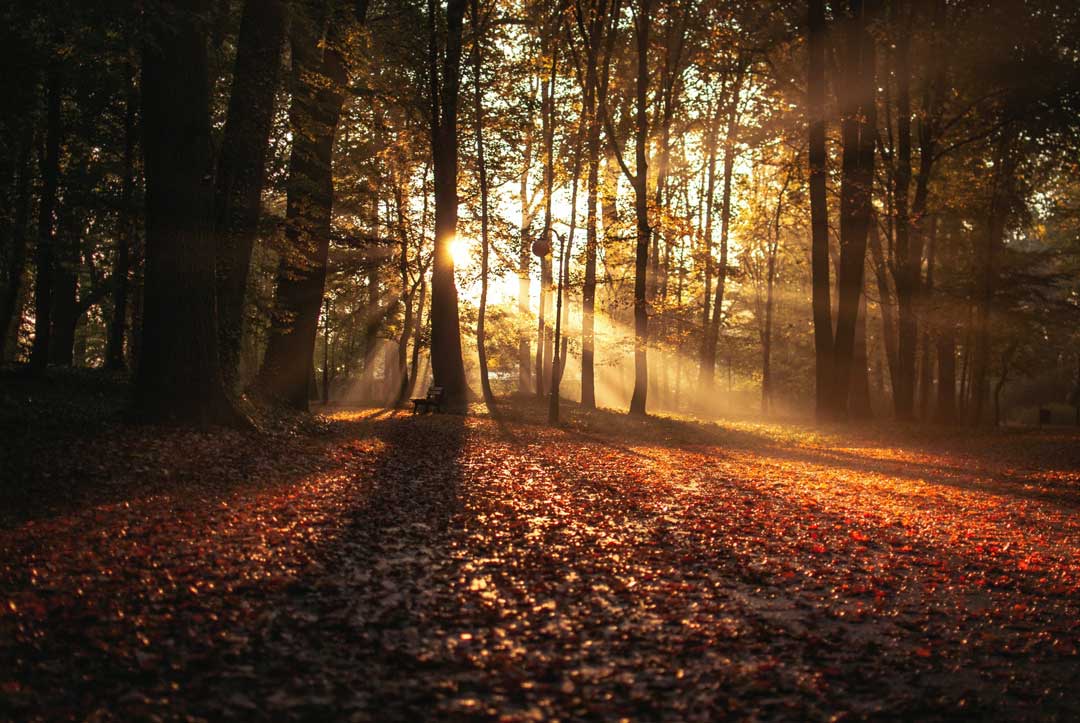
I find his point of view interesting because I don't really look forward to autumn/winter however this year I have been drawn to the beautiful colours and vibrant sunrises and I am enjoying watching nature change. Perhaps this is a consequence of our new Covid way-of-life? Perhaps I’m just getting older, wiser…?
When I take a look at my life, change has fuelled my personality and I will (not always wisely) initiate it as a way creating sparks, as in the words of Biffy Clyro “My head’s a f***ing carnival” - bored easy, like a new puppy, I need entertaining. What do I do to balance this? I practice yoga, pranayama, and meditation because it is within routine, consistency and discipline that I come home to myself and stop bouncing around.
Practicing yoga - I can play with the routines, I can change it up to suit my moods and my body, but ultimately it is the practice of stepping on to the mat, within the familiarity and safety of the poses, always always returning to the breath : THIS keeps me sane and WHOLE.
With it, I can embrace whatever life throws in my direction.
Life is busy and there’s always something that needs to be done. Someone always needs something from you. When was the last time you said no to an invite or took yourself off for a little ‘me’ time? Do you remember a time when you did? And how good you felt after?
This is what we find when we step onto our mats. Our yoga practice gives us this ‘after glow’ and we then take that away so that it fuels our existences and that of those around us.
In TCM, the element of autumn is Metal. Metal comes from the Earth, a place that doesn’t enjoy extremes, but nonetheless produces something which is changeable, malleable, strong and yet flexible - think of your average can of baked beans: we open the can, rinse it clean and send it off for recycling where it can easily be transformed back into a can. Can we be a little more ‘metal’ like…?
Just as we watch the trees changing colour and shedding their leaves during autumn, we too can embrace change by taking a few minutes to focus on our breathing. Try this now:
Viloma breath (3-part exhale)
- Sit comfortably either on the floor or a chair, ensuring your back is upright and your head is not resting against anything.
- With closed eyes, begin to focus upon your breath, slowing it down and encouraging it to lengthen naturally.
- Take a deep, yet easy inhalation and if it feels ok, hold the breath for a few seconds until you want to exhale.
- Divide your exhalation into 3 equal parts, pausing for 1-2 seconds in-between each part, like this: exhale one third, pause, exhale second third, pause, exhale final third and naturally pause before the following inhalation is ready to take place.
- Practice for 1-2 mins and then sit for a further 1 minute noticing whatever there is to notice. Has anything changed?
And if you need a little consistency to bring you back to your centre, here’s a simple Sun Salutation flow that you can learn, watch on repeat and join in with at your leisure: Sun Salutation
I continue to aspire to these ideals of Lao Tzu:
“For all things there is a time for going ahead, and a time for following behind,
A time for slow breathing, and a time for fast breathing,
A time to grow in strength and a time for decay,
A time to be up and a time to be down.
Therefore the sage avoids all extremes, excesses, and extravagances.”
Hmmm… please take time to remember that this is all just a practice. We keep showing up, we keep practicing, growing, evolving… change can be good.
Much love x